For centuries, the eternal love story of Radha and Krishna has transcended time, inspiring poets, musicians, and artists to capture its essence through their crafts.
In this blog post, we’ll explore the historical roots of Radha Krishna artistic paintings, decode their profound symbolism, examine traditional and contemporary techniques, and provide insights into collecting or commissioning these divine artworks.
By the end, you’ll gain a deeper appreciation for this sacred art form, understand its cultural significance, and discover how it continues to resonate in today’s creative world.
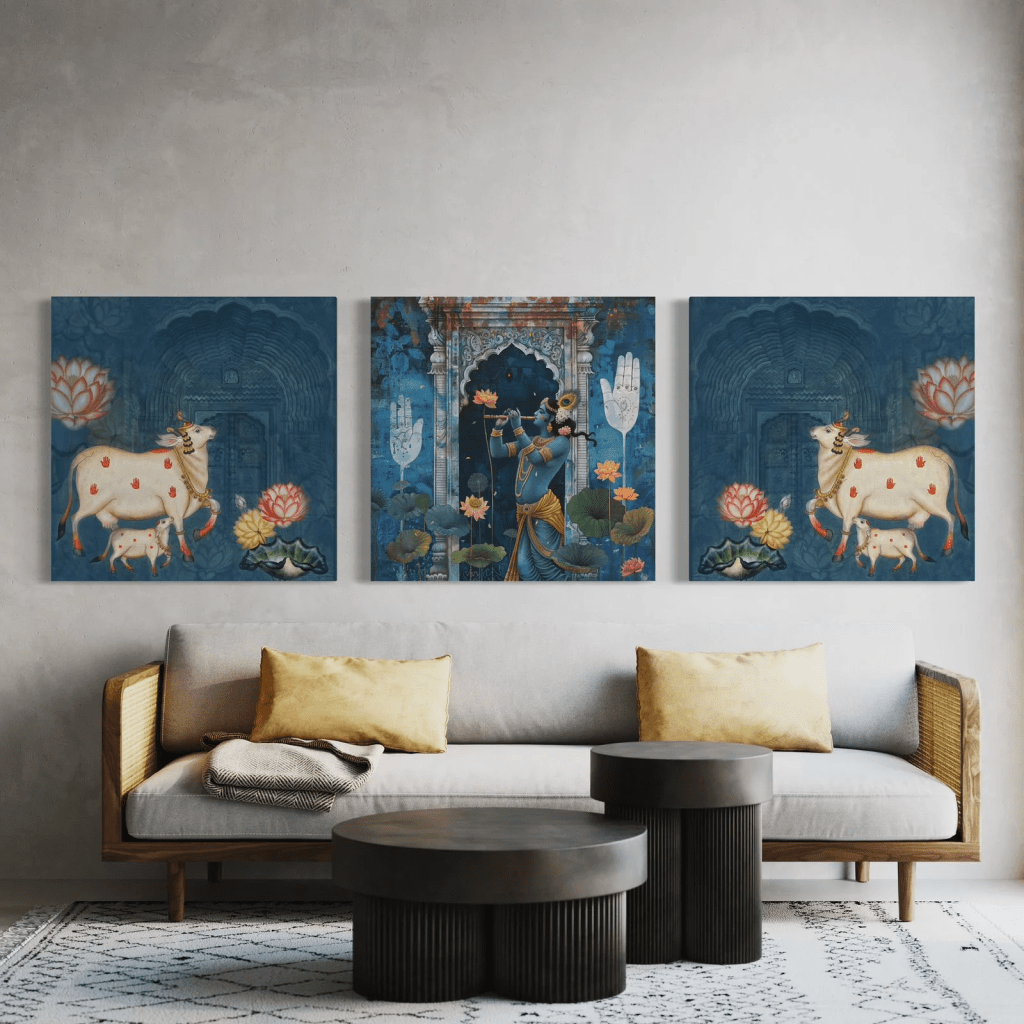
1. Historical Significance of Radha Krishna Paintings in Indian Art
The tradition of Radha Krishna paintings dates back to ancient India, flourishing during the Bhakti movement (8th–17th century). These artworks were not merely decorative but served as spiritual conduits, illustrating episodes from sacred texts like the Bhagavata Purana and Gita Govinda. Regional schools like the Kangra, Rajasthani, and Pahari styles refined the art, blending vibrant colors with intricate detailing to depict divine leelas (playful acts) of the celestial couple.
Key historical milestones include:
- 16th-century Miniature Paintings: Commissioned by Mughal emperors and Rajput kings, these works fused Persian influences with Indian spirituality.
- Ravi Varma’s Renaissance: Raja Ravi Varma’s 19th-century oleographs democratized Radha Krishna imagery, making it accessible to households.
2. Symbolism in Radha Krishna Art: Decoding Divine Love
Every element in a Radha Krishna painting carries layered meanings, rooted in Hindu philosophy:
- Peacock Feather (Krishna’s Crown): Symbolizes beauty, immortality, and Krishna’s connection to nature.
- Flute: Represents the call of the divine, drawing devotees (like Radha) toward spiritual awakening.
- Lotus Flowers: Signify purity and the blossoming of love amidst life’s challenges.
Artists often juxtapose Radha’s human devotion with Krishna’s divine playfulness to illustrate the soul’s yearning for union with the Supreme. The rasa lila (cosmic dance) scenes, bathed in moonlit hues, epitomize this balance of earthly emotion and transcendental bliss.
3. Traditional Techniques for Creating Authentic Radha Krishna Artworks
Authentic Radha Krishna paintings adhere to time-honored methods, ensuring spiritual and aesthetic integrity:
- Natural Pigments: Artists use minerals, plants, and stones (e.g., lapis lazuli for blue, saffron for orange) for longevity.
- Brushes & Canvases: Fine squirrel-hair brushes and handmade paper or silk create delicate features and flowing drapery.
- Gold Leaf Embellishments: Gold symbolizes divinity, often highlighting halos or jewelry.
Modern workshops in Jaipur and Nathdwara still practice these techniques, preserving the legacy of masters like Nihal Chand and Sahibdin.
4. Contemporary Radha Krishna Art: Fusion of Tradition and Innovation
Today’s artists reinterpret this timeless theme through modern lenses:
- Digital Art & Mixed Media: Platforms like Instagram showcase digital artists blending Tanjore-style iconography with 3D effects.
- Abstract Interpretations: Painters like Anjolie Ela Menon use bold strokes to evoke emotion over literal representation.
- Global Influences: Japanese artist Yuko Yamamoto merges Krishna’s motifs with Ukiyo-e aesthetics, symbolizing universal love.
Despite innovations, the core theme—prema bhakti (devotional love)—remains unchanged, proving the adaptability of this sacred narrative.
5. How to Choose a High-Quality Radha Krishna Painting: Expert Tips
Whether buying for devotion or décor, consider these factors:
- Provenance: Opt for artworks from reputed galleries (e.g., Chitrakala Parishath) or certified artists.
- Material Authenticity: Handmade papers, natural dyes, and aged canvas indicate traditional craftsmanship.
- Artist Reputation: Research contemporary names like Kailash Raj or Manish Soni, celebrated for their detail-oriented works.
For commissions, discuss symbolism preferences (e.g., specific leelas or color palettes) to personalize the piece.
6. The Cultural Impact of Radha Krishna Art Beyond Spiritual Contexts
Radha Krishna paintings have permeated global culture:
- Interior Design: Designers use muted Madhubani-style pieces for minimalist spaces or opulent Tanjore art for statement walls.
- Fashion & Merchandise: Designers like Sabyasachi Mukherjee incorporate motifs into textiles, while Etsy sellers offer Radha Krishna-themed home décor.
- Festivals & Weddings: These paintings adorn mandaps and invitations, symbolizing eternal union.
7. Preserving Radha Krishna Art for Future Generations
Initiatives by organizations like INTACH (Indian National Trust for Art and Cultural Heritage) and digital archives by Google Arts & Culture ensure these artworks survive modernization. Collectors are urged to avoid synthetic reproductions, which dilute cultural value.
Conclusion: The Timeless Allure of Radha Krishna Artistic Paintings
From ancient temples to modern art galleries, Radha Krishna art remains a testament to humanity’s quest for divine love and beauty. Whether you’re a devotee, art enthusiast, or cultural historian, these paintings offer a window into India’s spiritual and artistic soul. As the art evolves, its essence—capturing the dance between the mortal and the eternal—stays forever unchanged.
 Wall Art Painting - Blog
Leave a comment