If you’ve ever stood in front of a Maa Durga painting, feeling awe sweep over you like a tide of energy and reverence, you’re not alone. Across generations, people have found themselves captivated by the aura and symbolism embedded in these sacred artworks.
In this blog, we’re going to delve into the origins, styles, and spiritual depth of Maa Durga paintings — not just as visual art, but as a cultural, religious, and emotional experience.
You’ll learn about the rich history of Maa Durga in Indian art, various regional painting styles, symbolism in her imagery, and how these paintings are created today — both traditionally and in contemporary forms. Whether you’re an art lover, a spiritual seeker, or just someone fascinated by Indian culture, this deep dive will inspire and inform.
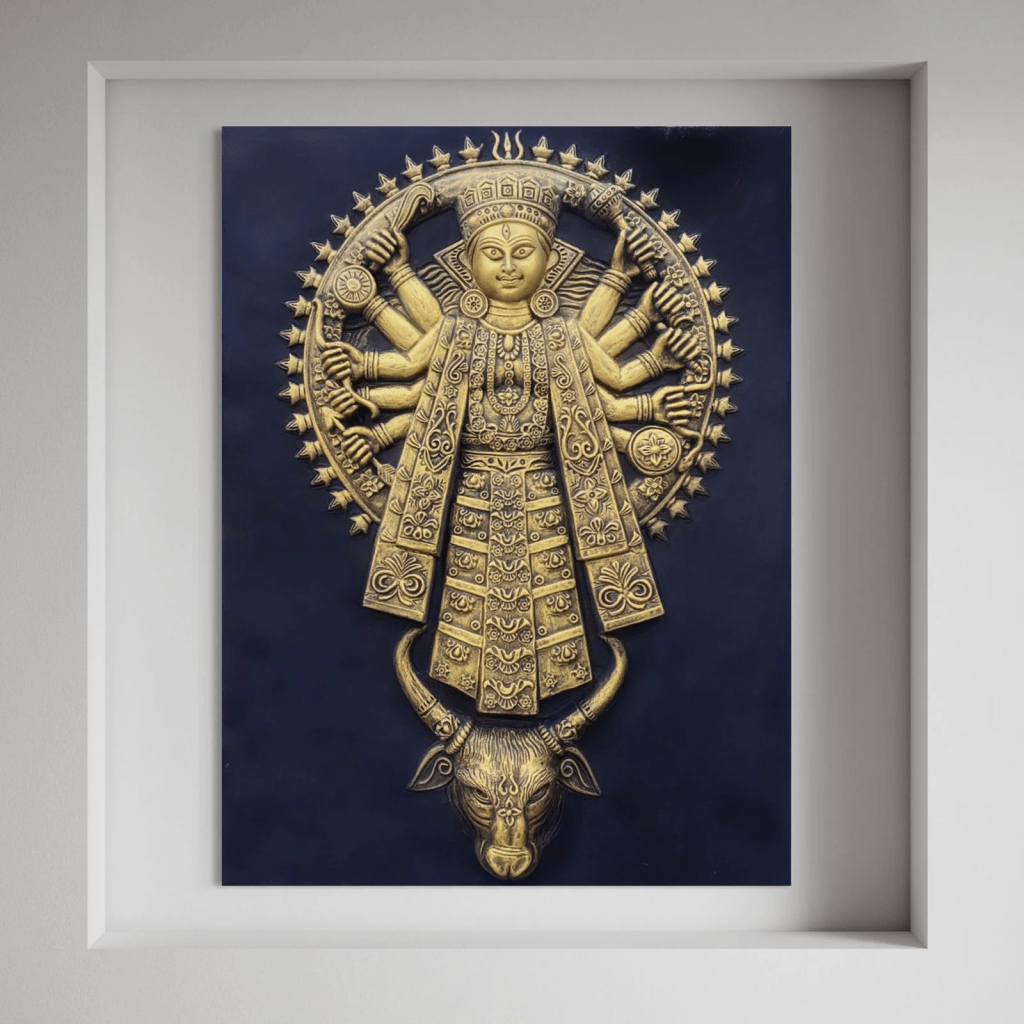
The Spiritual Significance of Maa Durga in Hindu Culture
Maa Durga is not just a goddess; she is the embodiment of Shakti (divine feminine power). In Hindu mythology, she is the slayer of the demon Mahishasura, the destroyer of evil, and the protector of dharma (righteousness). Her image evokes strength, grace, and compassion in equal measure.
Maa Durga paintings often depict her with ten arms, each holding a symbolic weapon gifted by other gods. Her lion mount represents courage, while her calm facial expression amid battle represents inner peace — a balance of ferocity and serenity.
These elements aren’t just symbolic; they communicate deep philosophical values. To devotees and art lovers alike, each stroke in a Durga painting represents layers of meaning.
Historical Origins and Evolution of Maa Durga Artworks
Early Depictions in Ancient Temples and Manuscripts
Durga’s visual representation dates back thousands of years. Sculptural and painted forms of the goddess have appeared in ancient temples, palm-leaf manuscripts, and cave murals — particularly in regions like Odisha, West Bengal, and Tamil Nadu.
The Gupta period (4th to 6th century CE) witnessed a flourishing of religious art, where Durga was often painted or carved in stone as the warrior goddess, symbolizing cosmic power. Over time, her depiction transitioned from rigid temple iconography to more expressive and colorful portrayals on canvas and paper.
Medieval and Mughal Influences
During the medieval period, regional styles like Pattachitra from Odisha, Madhubani from Bihar, and Kalighat painting from Bengal began incorporating Durga motifs in their folk traditions. These styles offered a more localized flavor to the goddess’s image — reflecting the customs, costumes, and even politics of their time.
Different Styles of Maa Durga Paintings Across India
1. Pattachitra: The Intricate Devotion from Odisha
The Pattachitra style, known for its detailed lines and mythological themes, often showcases Maa Durga in her Mahishasura Mardini form. The colors are bold, the figures stylized, and the storytelling dramatic. The entire painting is traditionally done on cloth using natural dyes and minerals.
2. Madhubani: Folk Art with Symbolic Depth
In Madhubani painting, artists use fingers, twigs, or matchsticks to draw vivid depictions of Durga with floral patterns, peacocks, and geometric borders. Originating from Mithila, this art form is not just decorative but deeply ritualistic, especially during festivals like Navaratri and Durga Puja.
3. Kalighat Paintings: Urban Folk Style of 19th Century Bengal
Kalighat artists brought Durga closer to the common people. Painted on mill-made paper with watercolors, these artworks captured scenes from the Durga Puja celebrations in Kolkata, with strong brushwork and satire often interwoven with religious sentiment.
4. Contemporary and Digital Interpretations
Today, artists continue to explore Maa Durga’s image in modern mediums — from oil on canvas to digital art and mixed media. While traditional motifs remain, many contemporary artists reinterpret Durga as a symbol of feminine empowerment, resistance, and resilience in a modern context.
The Symbolism in Maa Durga Paintings: More Than Just Visuals
Each element in a Maa Durga painting carries meaning:
- Ten Arms: Mastery over all aspects of existence.
- Weapons: Gifts from gods — symbols of divine support and readiness.
- Trident (Trishul): The three gunas — Sattva (balance), Rajas (activity), Tamas (inertia).
- The Lion: Bravery and determination.
- Mahishasura: The ego, which must be conquered.
These symbols go beyond religious storytelling. They offer lessons in personal growth, spiritual strength, and overcoming inner demons.
Why People Buy and Display Maa Durga Paintings Today
1. Spiritual and Emotional Connection
For many, a Durga painting is not merely decoration; it’s a source of protection, inspiration, and empowerment. People often place her image at home entrances, puja rooms, or meditation corners.
2. Artistic Appreciation
Collectors admire the craftsmanship — from the brushstrokes of a Pattachitra to the raw vibrancy of Kalighat. These paintings are often displayed in galleries and art fairs, and their value increases over time.
3. Cultural Pride and Identity
For diasporic Indians, owning a Maa Durga painting is a connection to home, festivals, and shared memories. It’s a piece of heritage that transcends time zones and generations.
How to Choose the Right Maa Durga Painting for Your Space
When selecting a Durga painting, consider:
- Style: Traditional or contemporary?
- Medium: Hand-painted canvas, digital print, or textile art?
- Artist: Support local or folk artists when possible.
- Symbolism: Which form of Durga resonates most — Mahishasura Mardini, Annapurna, or Chandraghanta?
Also, remember that authenticity matters. Choose sellers or galleries that offer certified hand-painted artworks, especially for traditional styles like Pattachitra or Madhubani.
Preserving and Promoting the Legacy of Maa Durga Paintings
While demand for these paintings has grown, especially during festivals, many traditional artists struggle with recognition and fair compensation. Supporting artisan communities, buying ethically sourced artwork, and educating others about the cultural significance of Durga paintings can help preserve this invaluable heritage.
Governments and NGOs are also working on digitizing archives, offering online platforms for folk artists, and organizing exhibitions globally — all efforts that contribute to Durga’s enduring legacy in art.
Conclusion: A Divine Canvas of Strength and Spirit
A Maa Durga painting is more than an artwork — it’s a living expression of devotion, culture, and inner power. Whether you’re drawn to her fierce form or her peaceful gaze, the goddess speaks through every color, symbol, and brushstroke.
 Wall Art Painting - Blog
Leave a comment